Are 50 Prompts Really Enough to Measure AI Visibility?

Common advice is that when trying to track performance in AI models, fewer prompts are better. This may be correct in the business to consumer (B2C) space, but when we talk about industrial companies, this simply isn’t true.
Why this doesn’t work for industrial customers
HubSpot is clear about what they think; quality over quantity. Smaller, precise prompts instead of a large umbrella set. Apparently, 25 to 50 prompts will suffice. Pretty much every tool on the market, including HubSpot’s own, allows for this number.
Where the advice comes from
The limited number that these tools allow can make a lot of sense in the B2C space. Searches are typically quite limited; someone looking for a new iPhone is going to type in comparatively simpler concepts: “compare cameras,” “best for video,” or “best phone for battery life.” Not the multi-faceted queries common in B2B.
In the space we and our clients exist in, the questions asked are never this simple. Complex requirements abound. A question to an AI model follows even less of the pattern of a traditional search; it’s not a question and answer but a dialogue, with follow-up questions following up on other follow-up questions. Each follow-up narrows the user’s requirements, often moving onto completely different topic areas. This results in coverage analysis being significantly more difficult than using traditional keyword tracking.
What is actually right about the recommendation
Several parts of this recommendation are absolutely correct.
- Prompts need to be based on realistic intents. That is, things a user is likely to actually enter into the AI.
- Prompts that include your own brand name will distort results. You want to capture the users who haven’t heard of you.
- Prompts always need to be relevant to your company and goals; anything else is just noise.
The part we disagree with is the idea that quality is the only prerequisite. In our space, quantity is just as important. The reason becomes obvious when you look at how industrial buying processes actually work.
The complexities of an industry portfolio.
Imagine a manufacturer with six product groups, four buyer roles, three journey stages and two languages, a fairly typical scenario. Even one prompt per combination (6x4x3x2) already reaches 144 prompts, almost three times as many as major AEO tools, including HubSpot’s, can handle.
With all the different variables (topic areas, personas, industry types, languages, regions) measuring 50 prompts is simply not enough in the B2B space. The hard-coded limit means dropping potential industry spaces, potential customers, potential market areas.
Standard tools, such as HubSpot, simply weren’t built to handle the complexities of the B2B space. They might be perfect for B2C, but because of this design, they struggle with the complexity of industrial user journeys. These complexities run from a single user researching six different topic areas to four roles in a buying center, each asking in different ways. Process engineering asks about measurement principles and accuracy classes. Maintenance asks about service intervals and spare parts. Procurement compares suppliers and delivery times. Safety asks about ATEX approvals and zone classifications. A consumer goes through a path, from question to purchase. Your clients go through a journey, the path of which can touch multiple areas. And this doesn’t even get into the language and regional landscape, where touch points can be across markets, across languages and across geographical lines.
This compounds multiplicatively once the technical long tail is included. In the industrial B2B space, the purchase decision doesn’t typically come from generic head prompts, but from highly specific questions and the multitude of variations they come in. Sure, “continuous belt weigher for abrasive bulk materials in Ex zone 21” may only be asked once, but the sum of that and all related stems and variations is the market. It is this long tail in which the specialists get their chance against larger competitors. And this is the part that 50 prompts will keep you from targeting. Measuring only head prompts underestimates the visibility of niche industrial leaders.
The statistical problem: AI answers are not rankings
There is a second, more vital difference. Classical search rankings are deterministic and clear. Position 3 is simply Position 3. However, AI rankings are more flexible and unclear. The same question can produce different answers depending on how it’s phrased, the model used, even between identical queries. Therefore, confidence in visibility scores actually comes from sufficient coverage and sufficient repetition.
Sampling works best when the thing being measured is stable and repeatable: how many terms sit in positions 1 or 2? Because AI answers aren’t rankings, each one needs to be analysed fully. Assuming that a subset of results can paint the big picture doesn’t work in a world where answers and models are constantly shifting and random noise is a feature, not a bug.
Visibility metrics, such as Share of Model or citation frequency, come from three factors; the number of prompts, the number of repetitions and which models are asked. These are then set against the random noise inherent in using LLMs to answer questions. This means that the smaller your prompt set, the more these variables distort how meaningful your results actually are. Other tools may try to reduce this with monthly tracking. While useful, this puts a band-aid on the symptom instead of really solving it.
The right question: How large is your topic space
This was the gap we repeatedly encountered when evaluating existing AI visibility tools.
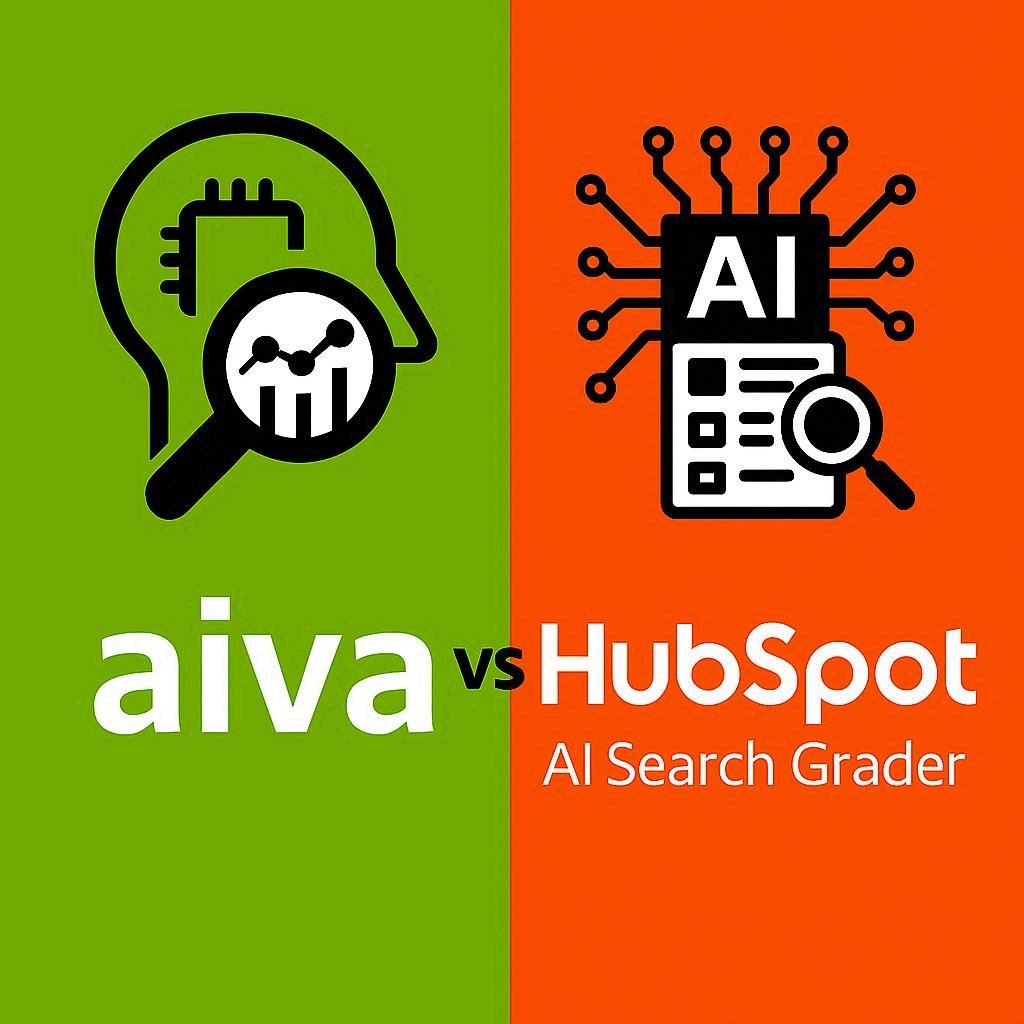
To concretely analyse AI Visibility in the Industrial Space, we had to build our own tool: aiva. We couldn’t find a solution that allowed us to measure how our clients, and others in the B2B space, are discoverable via prompts in an AI-first world.
When examining your topic space, the first step is to structure it. This means defining which topic areas, buying center roles, journey phases, industries, markets and languages should be examined. After this, each prompt should be evaluated for intent realism. After all this important foundation is done, visibility can finally be measured. This time it is measured through repeated queries across multiple AI systems, rather than from simple, isolated responses.
When the best practice fits
When a platform’s recommended best practice aligns exactly with its own product limit, the methodology behind that recommendation deserves scrutiny. At minimum, it raises the question of whether the methodology determined the product limit, or the product limit determined the methodology.
HubSpot is built for a broad, largely non-industrial customer base where 50 prompts rarely cause pain. A serious answer to how many prompts you need begins with your topic space and not limits placed on you by tools.
This is the methodology aiva is built around.
With aiva, we build up a prompt set based upon your business. Because we are not bound by platform limits, we generate as many prompts as are needed to get a meaningful visibility score for your business. The result is a “Share of Model” metric that statistically smooths out fluctuations, citation analysis showing the actual sources feeding AI responses, and a competitive gap analysis that truly captures your technical long tail, which could be your strongest visibility feature.
Conclusion
In AI Visibility, quality is a prerequisite. Coverage is a requirement. They are not competing ideas. Both are required for meaningful measurement. Coverage needs to be determined by the complexity of your portfolio, your services and your customers, not by any baked-in limits of the tool you are using.
For B2C products, HubSpot’s and other AEO tools’ 50 prompts might suffice, but for industrial companies with multiple product lines? With large buying centers? International markets? For industrial companies, the question isn’t whether 50 prompts are enough. The question is how large your topic space actually is.
Wouldn’t you like to know the actual size of your topic space, and just how visible you are in it today?
An aiva Analysis answers questions with concrete features:
➡️ Download the sample aiva Analysis Now (PDF)
Questions about aiva?
➡️ Request a Quote Here